So, the first EV-specific thing I actually bought was a new number plate. I was never into personalised plates but I looked this one up on a whim and bought it then and there.

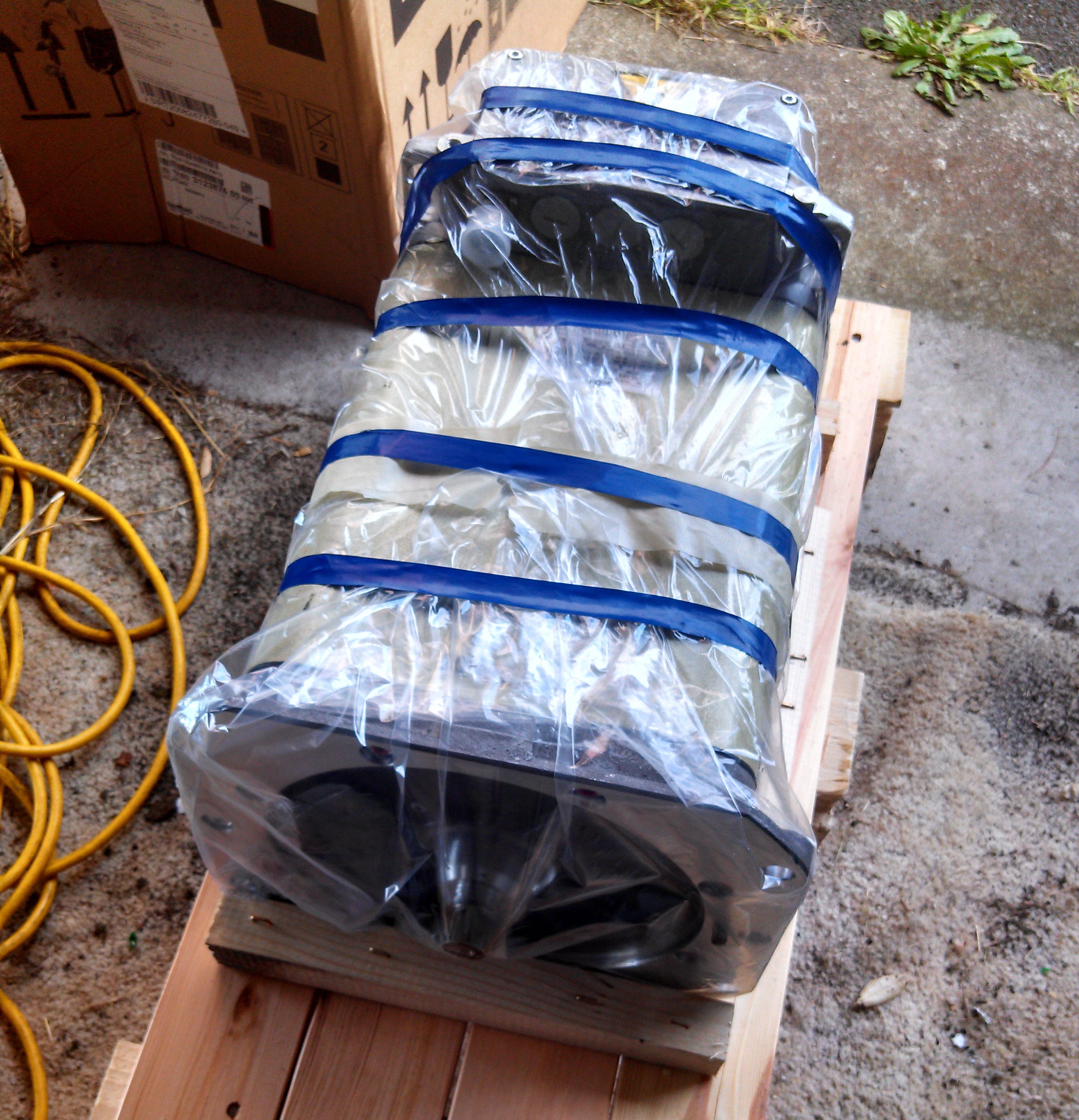
Motor will be liquid cooled Siemens 1PV5135 4WS14 AC motor. Tough call against the HPEVs motors, but sealed and liquid cooled sounds more reliable to me. The downside is more fabrication compared to HPEVS with an EV West accessory plate. I went with AC because I want regenerative braking for all the hills in my city. The motor has been ordered from EVTV and arrived today. It is HEAVY. But it spins freely and survived the journey relatively unscathed. The tape is there to seal it up against the salt air that permeates this fine country of ours in the coastal regions.

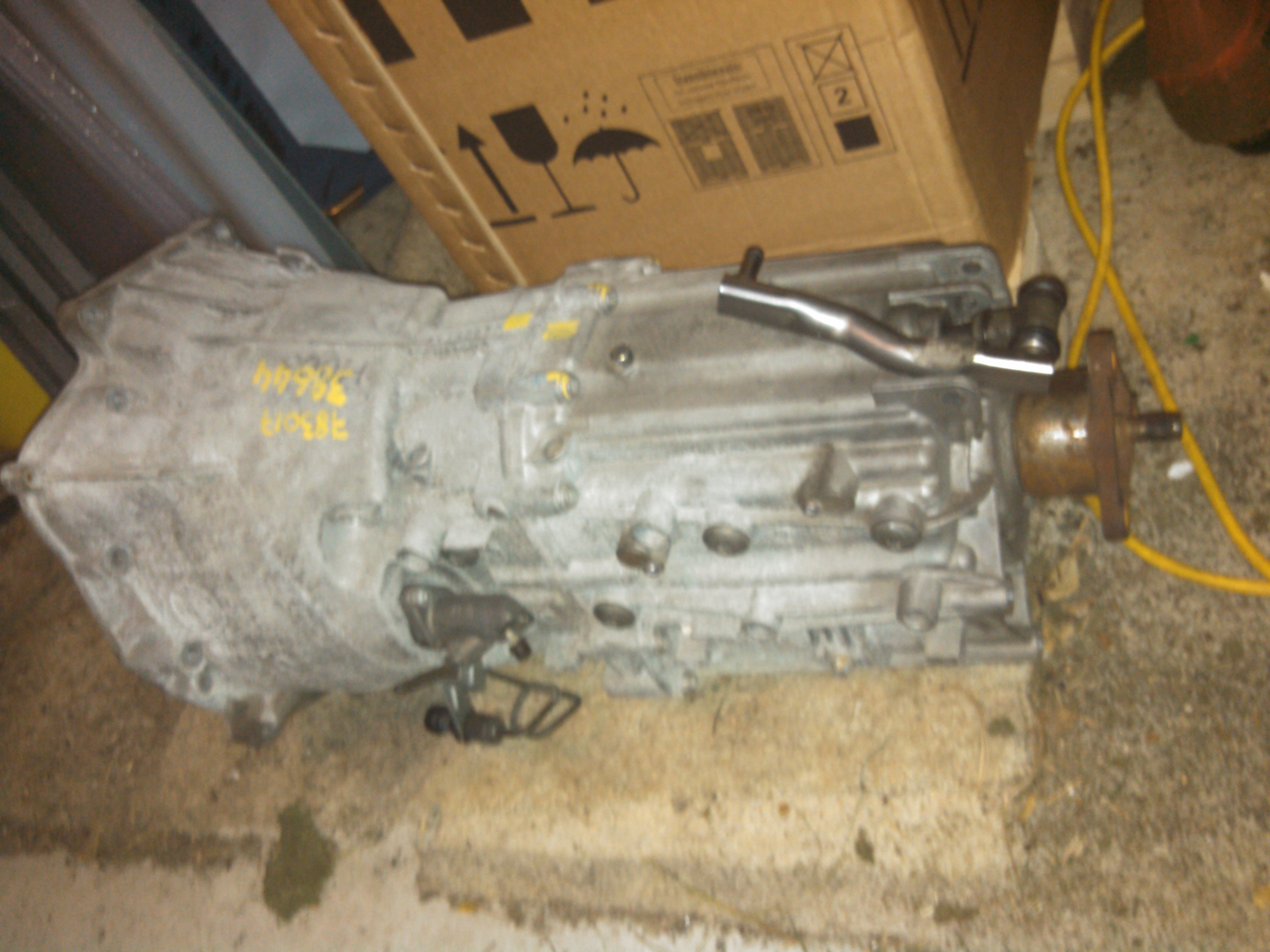
Next up, transmission. Used ZF 6-speed manual, running clutchless. Drive shaft and shifter are ex-UK via eBay. Additional conversion components will be sourced locally or from ECS. It’s not cheap to convert from automatic to manual, but my transmission isn’t quite right and a manual box without clutch will be much more efficient than torque converter and auto box. The box should arrive early November. Going clutchless saves $2000+ and means less inertia and weight, and less parts to buy, e.g. pedal box, etc. The car should still do 0-100 in under 10 seconds fully loaded in 2nd gear, or 6-ish seconds with just me in the car and the initial 112 cell battery pack.
Controller will be liquid cooled Scott 100 with electronic brake add-on, and I’ll try to get CAN bus BMS integration working. Locally made so hopefully assistance will be easier if needed. And of course it’s good to support local manufacturers where possible. An SD200 is an option if the car turns out to be too heavy for the SD100… but the numbers suggest performance with the SD100 will be similar to stock 150HP 320d.
AC charger will be liquid cooled Current Ways BC 6.6 kW charger with CAN bus, J1772, and BMS integration. great value and powerful enough for most single phase 230V charging. DC charging support is via the BMS.
BMS will probably be Orion BMS with CAN and Torque support. I’m really liking the vehicle and component integration. Having wired up an airplane before I’m thinking less wires snaking through the car is a good thing, which means I prefer a distributed CAN based BMS… but I also prefer reduced parts count… tough call. CHAdeMO support in the Orion BMS wins me over though, so that’s the current choice. I’ll need to add a Gigvac contactor and Yakazi plug from EVTV to finish off the CHAdeMO support.
Battery pack is most likely to be 112 CALB 72CAM lithium batteries to give 358V nominal, ranging form 280V minimum to 409V maximum, and 22 usable kWh. Hoping to rewire and double the number of cells in parallel later to give 44kWh and 250km range. Value for money CALB is pretty hard to beat but the trade-off is space and weight. Higher voltages mean more power through a lower current system. More batteries mean more range but also more dollars. The batteries will be the most expensive part of the conversion.
Battery boxes will be bespoke of course. Welded steel seems like the obvious solution, but aluminium works well on aircraft and composite is looking like a good option now, for reproducibility and to best fit all the curves in the car.
Vehicle interface will be via Avin USA GPS/Nav running Android, with Torque to display battery charge and motor information (other apps will be used, e.g. iOnRoad, Pandora, GPS navigation, etc).
A custom CAN-DBus adaptor will join the Controller/BMS/Charger network to the vehicle network, including gauge cluster to provide coolant temp, RPM, and battery capacity.
It’ll also need a MES 7/60E2 vacuum pump, MES fluid heater, and EvParts AC compressor.
The car will need to have it’s registration changed to reflect the new fuel type.
Certification will be needed, hopefully not to onerous.
 BMW 320e Electric Vehicle